Biology and behaviour
Pigs forage using a highly sensitive snout adapted for rooting — finding roots, tubers and other food in the soil. Their behaviour is shaped by strong motivation to explore and manipulate their environment.
They communicate via a range of vocalizations, form social hierarchies and show cognitive abilities such as problem solving and memory that are often underestimated.
Behaviour note
Environmental enrichment (rooting areas, toys, social contact) strongly improves welfare and reduces stress-related behaviours.
Anatomy highlights
Distinctive traits include a powerful neck and jaw for rooting, a relatively large brain, acute olfaction and hearing, and cloven hooves adapted for varied terrains.
Domestication & human uses
Domesticated thousands of years ago, pigs provide meat, hide and other products. They also contribute to research, therapy settings, and regenerative farming models.
Welfare-forward husbandry emphasizes space, social contact and opportunities to perform natural behaviours like rooting and wallowing.
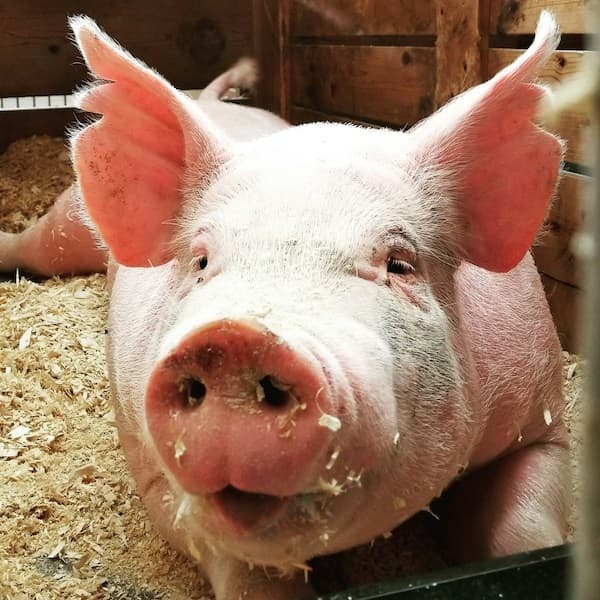
Portrait of a pig
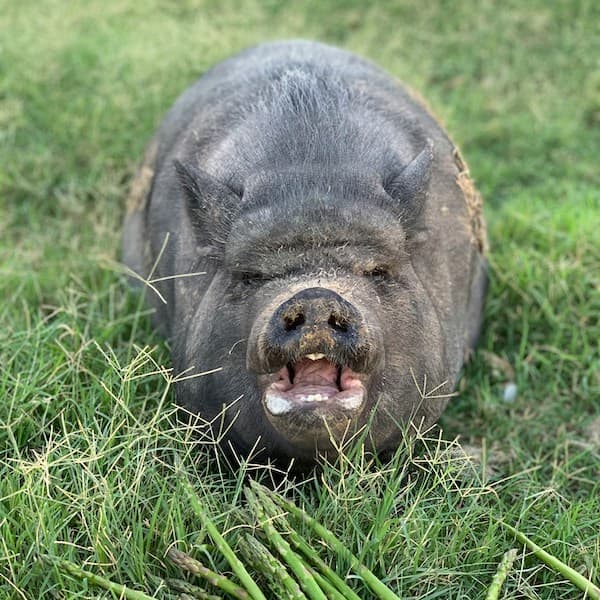
Pig in pasture
Conservation & wild relatives
Wild suids, including wild boar and island endemics, face habitat loss and hunting. Conservation must balance ecological roles, genetic diversity and human–wildlife conflict.
Ecosystem role
By disturbing soil and dispersing seeds, suids help maintain habitat heterogeneity — a key ecosystem service.
Further reading
- Overview of suid taxonomy and species.
- Research on pig cognition and social behaviour.
- Welfare and husbandry guidelines for domestic pigs.